LED Display Acronyms Explained: SMD, COB, GOB, IMD and MIP

TLDR:
What do LED display acronyms like SMD, COB, and GOB mean? DIP (Dual In-line Package) is the oldest type, used in large stadium screens. SMD (Surface Mounted Device) combines RGB LEDs in small packages and is the standard for rental and staging. IMD (Integrated Matrix Device) groups four RGB sets in a 2x2 matrix with 2.5x more solder bonding area than SMD for greater durability. COB (Chip on Board) mounts LEDs directly onto a substrate, enabling sub-1mm pixel pitches with wider viewing angles but higher cost and near-impossible field repair. GOB (Glue on Board) coats SMD modules in resin for bump protection. COG (Chip on Glass) mounts LEDs on glass substrate, pointing toward next-generation MicroLED displays.
| Package type | Pixel pitch range | Repairable in the field? | Durability | Cost | Best fit for |
|---|---|---|---|---|---|
| DIP | 6mm and up | Yes | High | Low | Stadium, high-brightness daylight |
| SMD | 1.2mm to 10mm | Yes, pixel level | Moderate | Baseline | Rental and staging standard |
| IMD | 0.9mm to 1.5mm | Yes, harder | Moderate | Moderate | Fine pitch where cost matters |
| GOB | 1.2mm to 4mm | Very difficult | Very high | +10 to 20% | Touring, high-traffic, trade show |
| COB | 0.7mm to 1.5mm | Near impossible | Very high | High | Broadcast, XR, permanent fine pitch |
| MIP | 0.4mm to 1.2mm | Module level | High | High | Emerging fine pitch |
| COG | Sub 0.5mm | No | N/A | Very high | Next-gen MicroLED, not rental yet |
Lions and Tiger and Bears! Oh my! I always think of this scene from The Wizard of Oz when I walk around trade shows and hear the acronyms and terminology being dropped by LED sales agents. GOB. COB. GOE. COG. SMD. IMD. DIP.
Does the potential customer feel lost in the LED forest, daunted by these strange-sounding creatures? Or does the inevitable follow-up sales pitch, "This is the best technology for you," put them at ease?
One could take a Socratic approach and repeatedly ask the sales agent, "Why?" until they get to the root answer. Or I could just tell you the meanings.
Spoiler alert: Some of the definitions will raise questions of, "Now, what the heck does that mean?" or "Why?" But I will try to keep the explanations simple and non-scientific.
PSS: We have this LED Wall Calculator tool that's very useful when you're deciding on what size and type of LED wall you want to build.
Why does LED batch matter for color matching?
LEDs are grown in batches or bins. Much like baking Christmas Cookies, any variance in the "growth" process, such as atmospheric conditions or input ingredients, will create variances in the wavelengths of light that the LEDs produce. LEDs are measured and binned according to their performance parameters. Color calibration methods have advanced significantly. Depending on your processing platform, the difference between batches of LED can be compensated for through calibration to an almost negligible effect depending on your application.
LED (Light Emitting Diode)
Electrical current passes through a semiconductor material causing it to emit light through a process known as electroluminescence (photons are involved!). There are 4 basic types used in LED Video Displays. DIP, SMD, IMD and COB.
DIP (Dual In-line Package)
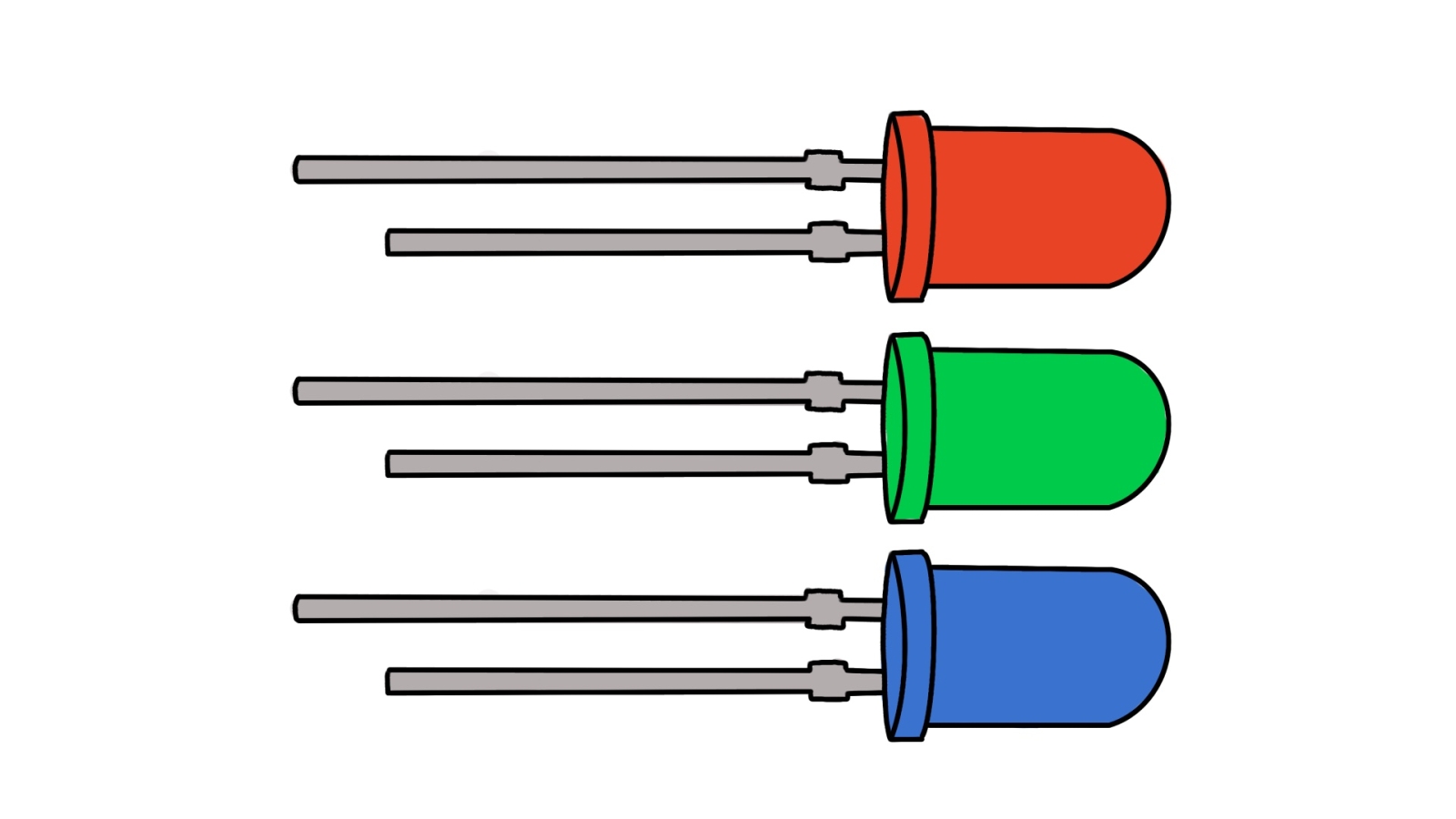
These are essentially the first LEDs and resemble a traditional lightbulb in design. It's a single-color LED encapsulated in plastic with two pins protruding from the package. The pins are pushed through a PCB (printed Circuit Board). They have typically been used as indicator lights, simple digital arrays (think old-school calculators), or very large LED screens (think sports stadiums) that need high brightness but not a fine pixel pitch.
What is an SMD LED display? (Surface Mounted Device)
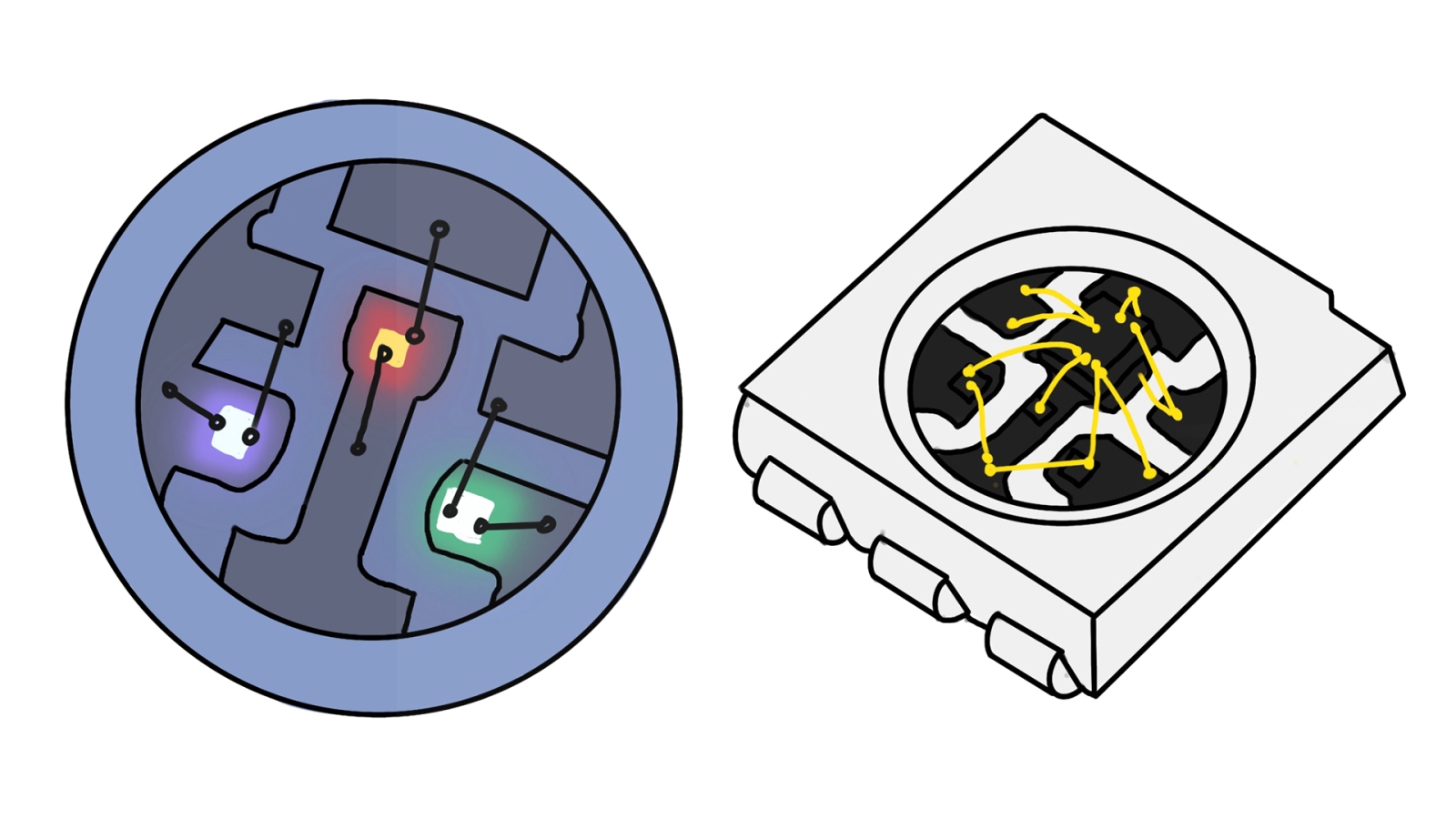
These combine multiple-color LEDs, usually RGB, mounted on a PCB and encapsulated in a package called a pixel. These packages are arranged in an array and soldered onto a larger PCB. These devices are much smaller and allow for higher-resolution video screens to be created. Most LED products used for Rental and Staging are SMD.
SHADER (Or Mask)
I'm going to slip this item in here. A shader or mask serves two purposes. It prevents ambient light or light from an adjacent pixel from spilling, "washing out" the light output. It also "masks" the PCB surface in between the pixels. Oh - shaders are also made in batches, and color will vary. Mask design will affect your viewing angle.
What is IMD, and how does it differ from SMD? (Integrated Matrix Device)
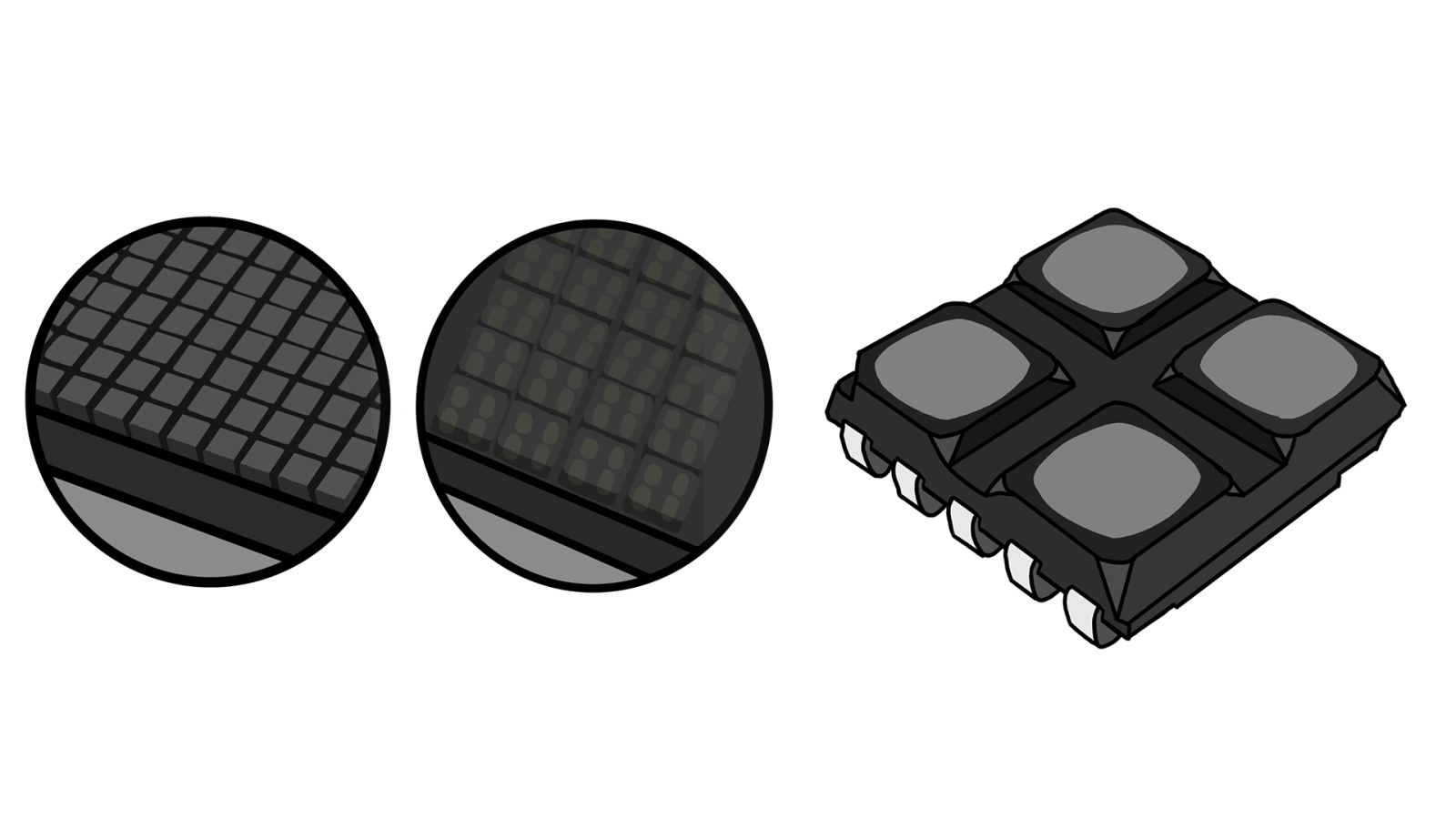
Also called 4 in One. Four groupings of RGB chips are mounted on a single substrate in a 2 x 2 matrix. Like SMD, these are then mounted onto a larger PCB. Because of the packaging, there is approximately 2.5x more solder bonding area than SMD, making these a very durable product. But they do not have a typical "shader" mask-like SMD. They are very smooth and clean looking when showing black. But without a shader, they are also subject to being washed out and having less contrast due to ambient light spill.
What is a COB LED display, and can it be repaired? (Chip on Board)
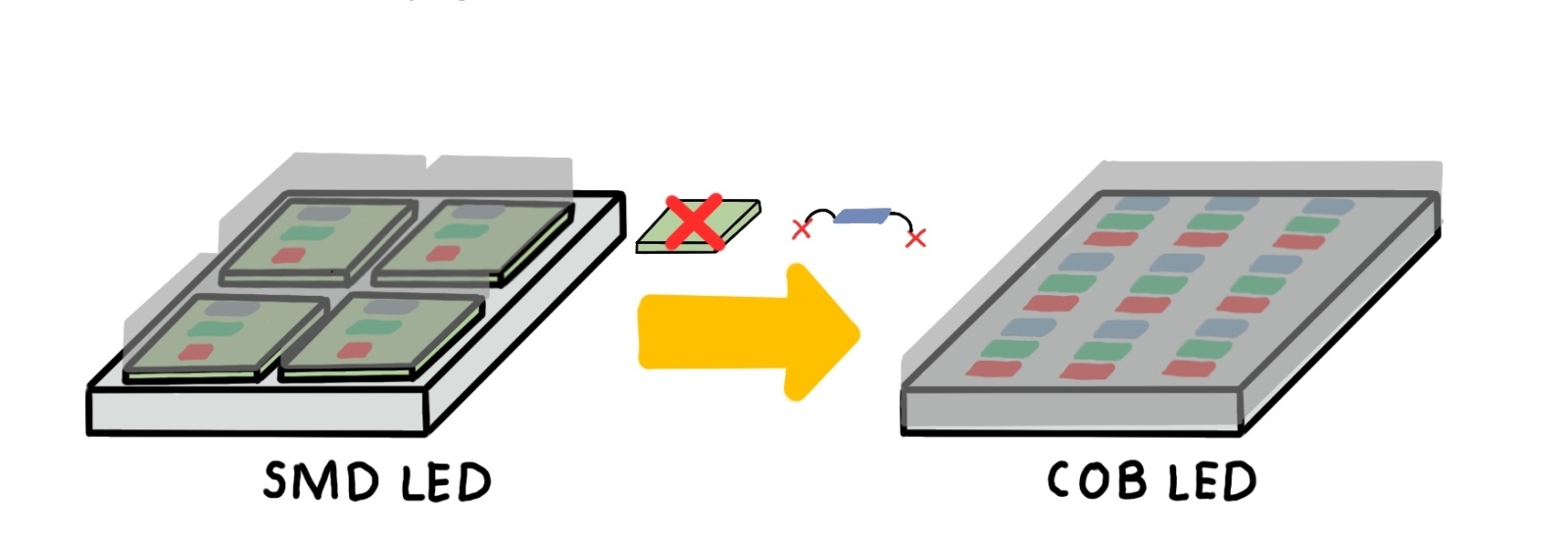
Rather than using individual packages, the LEDs are mounted directly onto a substrate, eliminating the need for wire bonds and "packaging" you have with SMD and IMD. This technology allows us to dive deep into sub-1 mm pixel pitches. It has many benefits, including no black lines between pixels, a wider viewing angle, better uniformity of color, and more resistance to bump damage than SMD. However, it is also more expensive and very difficult (near impossible) to repair when LEDs are damaged. With time, both factors should improve. It can be made outdoor rated very easily.
What is flip chip LED technology?
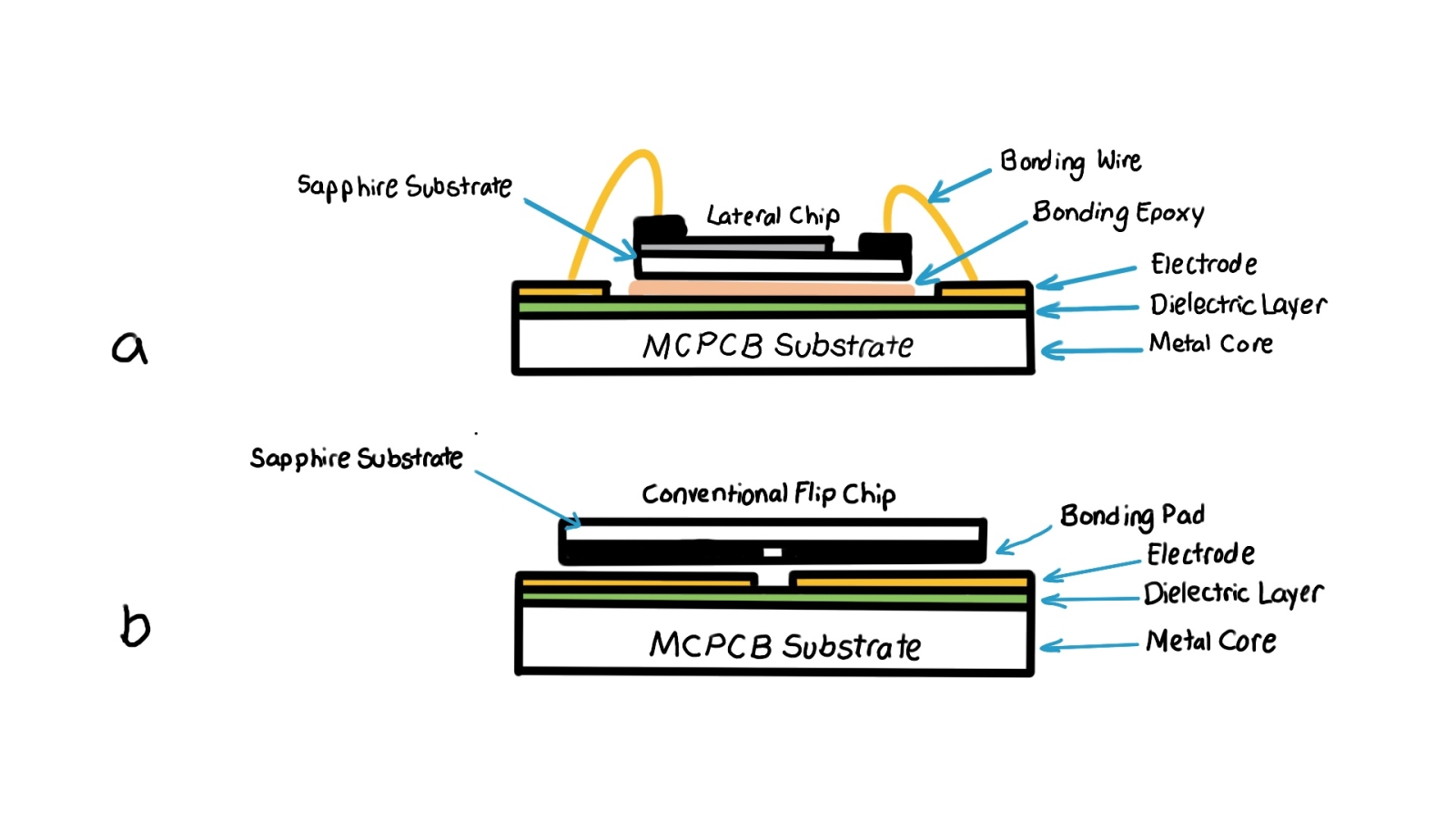
This is an alternative method of "wiring" LEDs to the substrate. Traditionally, wires are attached to solder bumps on the surface of the LED to connect the P and N electrical conductors to the substrate. With flip chip, the LED is "flipped" over so the solder bumps are on the bottom and connect directly to the substrate. This makes a very strong bond and improves the thermal properties and efficiency of the circuit.
What is GOB, and when is it worth the cost? (Glue on Board)
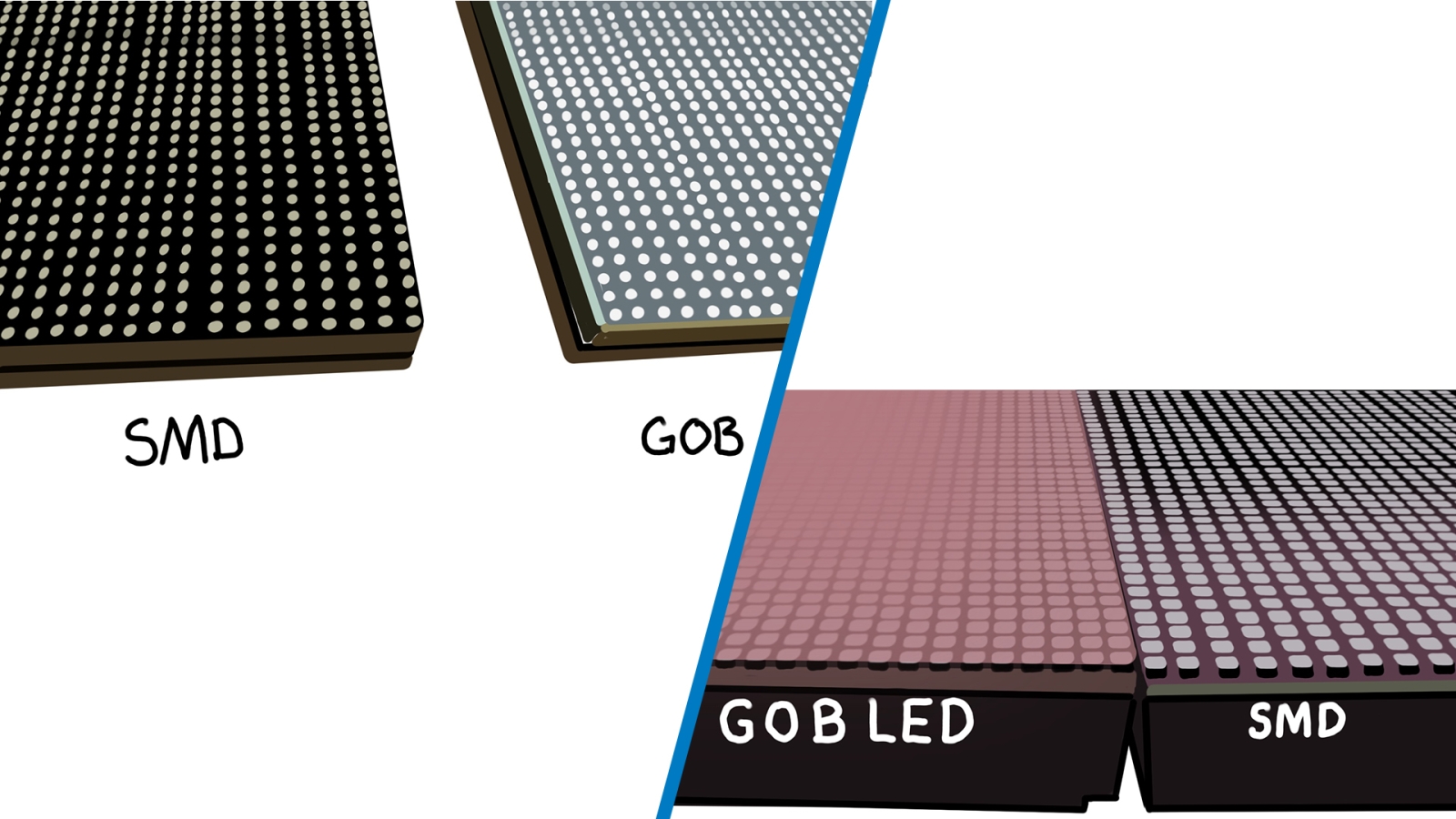
As we dive into sub 2mm screens with SMD-type packaging, bump damage increases dramatically. We even see this issue in 2mm screens. Glue on Board covers the entire surface of the module with a resin that encases the SMD package, protecting it from weather and edge damage.
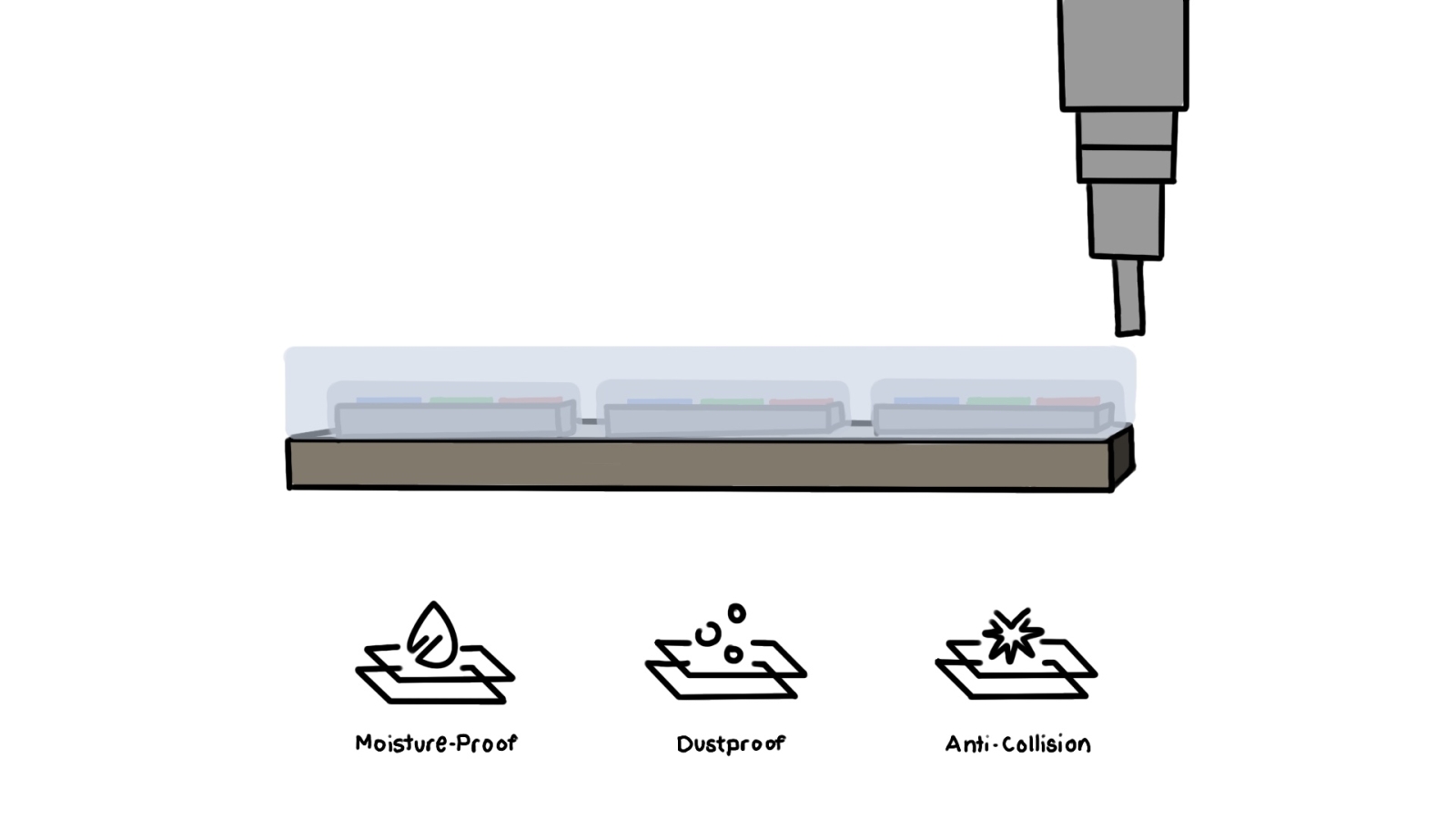
However, it is also extremely difficult to repair and nearly impossible for the repair to look perfect. But it does make a very attractive, flat, uniform screen, similar to how a COB product looks.
GOE (Glue on Edge)
Not a widely discussed option, but it exists, nonetheless. This takes the GOB technology and applies it to the outer edge of the module only. The theory is that with those SMD packages essential glued into place, they are stronger and you will incur less bump damage.
COG (Chip on Glass)
This is what it sounds like. The LED are mounted on glass, a silica-based material, and the paths are etched into the glass. This is not something we will likely see in Rental and Staging the way we think of current LED video screens. But if you think of large screen monitors....now you see a path to the next generation.
COG works well with another newish technology, MicroLED, which is similar to OLED.......hmmmmm.....
If you made it this far, thank you! Here are some other resources that will be useful to you:
LED Wall Calculator
A Guide to LED Pixel Pitch
What is LED Pixel Pitch?